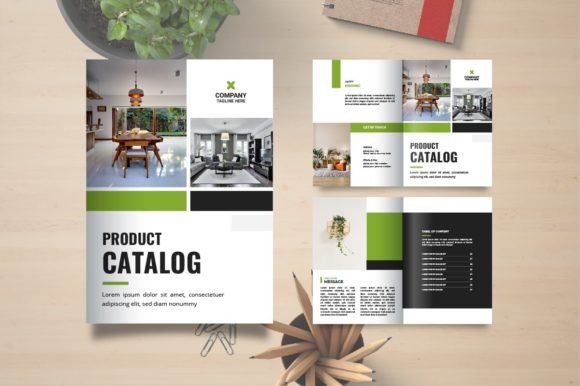
Mastering the Business Product Catalog Brochure Layout
Imagine walking into a potential client’s office, laying down a sleek, professionally bound book showcasing your entire product line, and watching their eyes light up. That tangible, high-quality impression is what separates fleeting digital ads from lasting brand authority. While we live in a screen-dominated world, the physical weight of a well-designed brochure or the seamless navigation of a digital catalog still holds immense power in B2B and B2C sales. However, creating these materials from scratch is often a resource drain that small businesses and entrepreneurs simply cannot afford. This is where having access to a robust, versatile design template changes the game, specifically one built for adaptability across diverse industries.
Why Versatility Matters in Modern Design Assets
Whether you are selling high-end real estate, managing an agricultural supply chain, or launching a new line of consumer electronics, the underlying challenge remains the same: presenting your products clearly and attractively. A generic layout often fails because it cannot accommodate the specific needs of different sectors. For instance, a real estate company needs high-impact imagery of properties with clean text blocks for specifications, whereas an agricultural firm might need grid-based layouts to display dozens of seed varieties or machinery parts without clutter.
The ideal Business Product Catalog Brochure layout bridges this gap by offering a flexible framework. Think of it not as a rigid mold, but as a sophisticated skeleton that you can flesh out with your unique brand identity. It allows a home sale company to create a glossy lookbook and a corporate entity to generate a technical product list using the same foundational design principles. This consistency is crucial for maintaining a professional image across different marketing channels.
Key Features That Define a Professional Template
When evaluating design assets, you need to look beyond the preview image. The usability of a template lies in its technical specifications and ease of customization. A top-tier Company product catalogue design template should prioritize the following elements to ensure you aren't stuck spending hours fighting with the software:
- High-Resolution Output: Look for files prepared at 300 DPI. This is non-negotiable for print materials. If you plan on printing large posters or detailed brochures, anything less will result in pixelation and a cheap appearance.
- Vector Formats: EPS files are industry standard for a reason. They allow for infinite scalability. You can resize your layout for a small pamphlet or a massive trade show banner without losing quality.
- RGB Color Space: While CMYK is traditional for print, many modern workflows start in RGB for better vibrancy on digital screens. A template set up in RGB is perfect for digital catalogs, email newsletters, and website integration, with easy conversion to CMYK for final print output.
- Typography Accessibility: Nothing halts a project faster than discovering you need to purchase a $50 font family to make the design work. Templates that utilize free fonts remove this financial barrier and legal headache, allowing you to execute the design immediately.
Practical Applications Across Industries
The utility of a well-structured catalog layout extends far beyond a simple list of items. It serves as a cornerstone for your broader marketing strategy. Let’s break down how different sectors can leverage this tool:
Real Estate and Property Sales
For land and home sales, the brochure is often the first physical touchpoint. It needs to evoke emotion while providing data. A structured layout allows you to balance large, aspirational photography of properties with necessary details like square footage, pricing, and contact information. You can use the grid systems within the template to create "Featured Listing" spreads that guide the reader's eye exactly where you want it.
Corporate and B2B Services
Corporate buyers value clarity and organization. A chaotic design suggests a chaotic business. Using a professional Business Product Catalog Brochure layout helps in presenting complex service packages or extensive product lines in a digestible manner. It allows for the inclusion of technical specifications, charts, and testimonials in a cohesive flow that builds trust and authority.
Agriculture and Industrial Supply
These industries often deal with high-volume inventories. The challenge is density—how to show 500 different parts without overwhelming the customer. A well-designed template uses modular grids. You can create a master page for product categories and sub-pages for specific items, ensuring that even a dense catalog feels organized and easy to navigate.
Enhancing Brand Consistency and Recognition
One of the biggest risks in marketing is inconsistency. If your social media graphics look different from your website, which looks different from your print brochure, you dilute your brand equity. A unified Company product catalogue design template acts as a visual anchor.
By customizing the colors and fonts within the template to match your brand guidelines, you create a seamless experience for the customer. When they see the brochure on a table, they should instantly recognize it as the same brand they follow on Instagram. This repetition builds recognition. Over time, customers begin to associate your specific visual style—your typography and color palette—with the quality of your products.
Design Tips for Maximum Impact
Simply inserting your images into a template isn't enough to guarantee success. You need to apply some fundamental design thinking to make the catalog work for you.
Visual Hierarchy is King
Guide the reader's eye. The most important element on the page—usually the product image or the headline—should be the largest and boldest. Use the whitespace provided in the template; don't feel the need to fill every square inch. White space (or negative space) gives the reader's eyes a rest and makes your content feel more premium.
Typography and Readability
While decorative fonts might look interesting, they are often difficult to read in long paragraphs. Stick to clean, legible fonts for your body copy. Use display fonts or bold weights for headers to create contrast. Ensure there is enough leading (space between lines) so the text doesn't feel cramped. A professional layout template usually comes pre-set with these typographic hierarchies, saving you the guesswork.
Call to Action (CTA)
Every page should have a purpose. What do you want the reader to do next? Visit a website? Call a sales rep? Scan a QR code? Make sure your CTA stands out. Use a contrasting color button or a bold text block at the end of a product section to drive that engagement.
Digital vs. Print: The Hybrid Approach
While the term "brochure" often implies print, a modern catalog needs to live in the digital space as well. Because the template is provided in a high-quality vector format (EPS), it is easily adaptable for digital distribution. You can export it as an interactive PDF with clickable links, or slice specific sections to use as social media posts.
For example, a "Product of the Week" graphic for Facebook can be pulled directly from the catalog layout, ensuring visual consistency. This hybrid approach maximizes your return on investment. You are not just creating a brochure; you are creating a library of design assets that can be repurposed across your website, email campaigns, and presentations.
Final Thoughts on Workflow and Efficiency
Time is the most valuable resource for any business owner or designer. Spending days crafting a layout from zero is rarely efficient. By starting with a high-quality, customizable framework, you bypass the technical hurdles of alignment, grid systems, and file setup. You can jump straight into the creative part: telling your brand's story.
If you ever find yourself stuck or need a specific adjustment that is beyond your current software skills, remember that support is often available. Reaching out to the creator of the template for customization tips can save you hours of frustration. Ultimately, the goal of a Business Product Catalog Brochure layout is to make your business look established, organized, and ready for growth. Whether you are selling a plot of land, a tractor, or a corporate software solution, presenting it with professional polish is the first step toward closing the deal.